massachusetts agroforestry access project (MAAP)
Agroforestry Demonstration Network
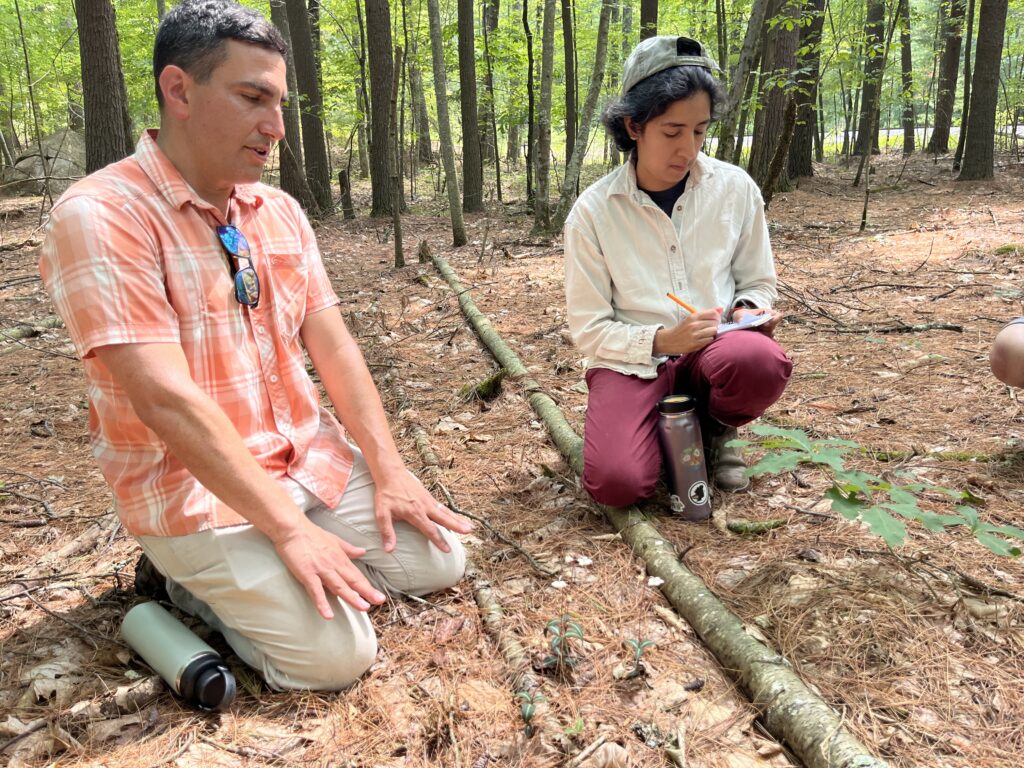
The Massachusetts Agroforestry Access Project (MAAP) will help Massachusetts put agroforestry on the map by building a network of farms and organizations implementing diverse agroforestry practices at multiple scales and in diverse contexts. MAAP recognizes agroforestry as a social movement and catalyst for both ecological restoration and community regeneration.
We are now accepting our first round of cohort participants! This unique two-year learning experience will help land stewards and farmers design, install, or expand agroforestry practices on their land and serve the growing community of landowners and service providers interested in practicing and promoting agroforestry in Massachusetts.
Why Agroforestry?
Agroforestry challenges the paradigms that separate forestry and agriculture and limit our ability to manage landscapes in more integrated ways. A state-supported agroforestry program that encourages a more diverse and inclusive spectrum of land care strategies and opportunities that can be applied at multiple scales in many different contexts and cultures will deliver ecological, social, and economic benefits to communities across the Commonwealth.
Why a Demonstration Network?
Demonstration sites are places where landowners and forestry professionals can go to see agroforestry practices in action. They can act as new hubs of interaction that expand the current reach of DCR’s programing while supporting the innovative work of underserved landowners in both rural and urban areas.
Pilot Cohort
Please read through this information before applying! Applications are due September 15, 2026. If you have any questions about the project or application, do not hesitate to reach out to woodlandsconnect@rdg.coop.
Pillars of Support
Financial Assistance
Payment to offset the investment of time in designing and learning about agroforestry systems as well as implementation funding to help bring your project to life
Technical Support
Targeted and culturally-sensitive guidance that listens to the unique needs and goals of each organization and site instead of applying a one-size-fits-all approach.
Community Networking
A network of peer practitioners to inspire, learn from, and pass on knowledge gained during the two-year cohort experience for the benefit of all land stewards.